Recent Update: IRCC Allows Students Under SDS Category to Apply for Study Permit with 6 Bands Overall in IELTS.
Introduction: In a recent development, the Immigration, Refugees and Citizenship Canada (IRCC) has announced a significant update regarding the Study Direct Stream (SDS) category for international students. Under the new guidelines, students with an overall IELTS band score of 6 can now apply for a study permit through the SDS program. This is a notable change that opens up more opportunities for aspiring students who may have previously been ineligible. In this article, we will delve into the details of this update, its implications, and how it benefits students aiming to study in Canada.
- Understanding the Study Direct Stream (SDS) Program: The Study Direct Stream (SDS) is a fast-track study permit processing program introduced by the IRCC for students from specific countries. It aims to expedite the study permit application process and provide a streamlined experience. Initially, the program required students to have an overall IELTS band score of 6.0 with no individual module score below 6.0. However, the recent update has relaxed this requirement, allowing students with an overall band score of 6.0 to be eligible for the SDS category.
- Implications of the New IRCC Update: The recent update by the IRCC brings a positive change for students who aspire to study in Canada but may not have achieved high scores in the IELTS examination. With the overall band score requirement reduced to 6.0, more students can now benefit from the streamlined application process offered by the SDS program. This change acknowledges that language proficiency is just one aspect of a student’s ability to succeed academically and adapt to life in Canada.
- Advantages of Applying
Under the SDS Program: Applying for a study permit under the SDS program offers
several advantages, including faster processing times and a simplified application process. Students who meet the requirements can expect their applications to be processed within a shorter timeframe compared to regular study permit applications. Additionally, applying through SDS provides students with greater certainty and transparency throughout the application process.
4. Eligibility Criteria
for the SDS Program: While the overall IELTS band score requirement has been
revised to 6.0, it’s important to note that certain conditions still apply to
qualify for the SDS program. These conditions include:
·Acceptance into a designated learning institution (DLI) in Canada.
· Payment of the first-year tuition fee.
· Purchase of a Guaranteed Investment Certificate (GIC) of CAD $10,000.
· Undergoing a medical examination.
· Obtaining a police certificate.
· Meeting all other standard study permit requirements.
Conclusion: The recent
update by the IRCC allowing students under the SDS category to apply for a
study permit with an overall IELTS band score of 6 is a significant step
towards inclusivity and accessibility in Canadian education. This change provides
more opportunities for international students who may have previously been
discouraged due to their language proficiency scores. If you meet the
requirements and aspire to study in Canada, consider applying under the SDS
program to benefit from faster processing times and a simplified application
process.

Canada Introduces Visa-Free Travel to 13 Countries, Opening New Doors for Global Connections!

Canada, known for its warm hospitality and diverse landscapes, has taken a significant step towards enhancing global connections by introducing visa-free travel for citizens of 13 countries. The new policy aims to strengthen international relations, promote tourism, and facilitate cultural exchange. Among the countries included in this landmark decision are the Philippines, Morocco, Panama, Antigua and Barbuda, St Kitts and Nevis, St Lucia, St Vincent and Grenadines, Trinidad and Tobago, Argentina, Costa Rica, Uruguay, Seychelles, and Thailand.
This move by the Canadian government marks a major shift in its visa policy, allowing citizens from these nations to travel to Canada for tourism, business, or short-term visits without the need for a visa. It demonstrates Canada’s commitment to fostering closer ties with these countries and encouraging people-to-people exchanges.
The inclusion of the Philippines, a nation with a significant diaspora in Canada, is expected to strengthen the already vibrant Filipino-Canadian community. This new development will facilitate easier travel for families to visit loved ones and encourage greater cultural exchange between the two nations. Morocco, a country renowned for its rich history and diverse landscapes, will benefit from increased tourism opportunities. Canadians will now have the chance to explore the vibrant cities of Marrakech and Casablanca, immerse themselves in the Sahara Desert, and discover the country’s fascinating cultural heritage.
For citizens of Panama, the visa-free travel policy presents exciting prospects for business and trade collaboration between the two nations. This new ease of travel will foster stronger economic ties and encourage investment opportunities.
The inclusion of Antigua and Barbuda, St Kitts and Nevis, St Lucia, and St Vincent and Grenadines, all members of the Caribbean Community (CARICOM), emphasizes Canada’s commitment to supporting its regional partners. The visa-free travel policy will boost tourism and allow Canadians to enjoy the pristine beaches, lush landscapes, and vibrant cultures of these Caribbean nations.
Trinidad and Tobago, known for its vibrant carnival celebrations and diverse cultural heritage, will also benefit from this development. The visa-free travel policy will encourage more Canadians to experience the lively music, delicious cuisine, and warm hospitality of the twin-island republic.
South America is well represented among the 13 countries, with Argentina, Costa Rica, and Uruguay being included in the visa-free travel list. Canadians will have the opportunity to explore the awe-inspiring landscapes of Patagonia, discover the natural wonders of Costa Rica’s rainforests and pristine beaches, and experience the charm of Uruguay’s historic cities.
Seychelles, an archipelago known for its stunning white sand beaches and crystal-clear waters, will become more accessible to Canadians, promoting tourism and encouraging sustainable travel.
Thailand, a popular destination for Canadian tourists, completes the list of countries where visa-free travel is now possible. This move will strengthen the already flourishing tourism ties between the two nations, allowing Canadians to immerse themselves in Thailand’s vibrant culture, visit ancient temples, and indulge in its renowned cuisine.
The Canadian government’s decision to implement visa-free travel to these 13 countries reflects its commitment to fostering global connections, promoting tourism, and encouraging cultural exchange. By easing travel restrictions, Canada aims to build stronger diplomatic ties, facilitate business opportunities, and enhance people-to-people connections with these nations.
It is important to note that travelers from these countries will still need to meet certain entry requirements, such as having a valid passport, sufficient funds for their stay, and a return ticket, among other criteria. Additionally, the duration of visa-free stays may be subject to specific regulations set by the Canadian government.
With this progressive move, Canada has opened its doors wider to the world, welcoming citizens from diverse nations to explore its vast landscapes, experience its multicultural heritage, and create lasting memories. As the bonds between Canada and these 13 countries grow stronger, the opportunities for mutual understanding, economic cooperation, and cultural enrichment are set to flourish.
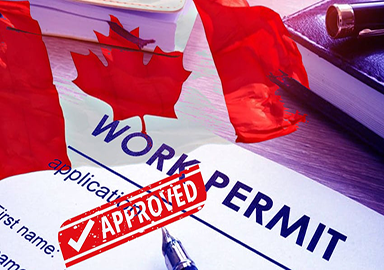
Work Permit
“ILS Canada assumes no responsibility or liability for any errors or omissions in the content of this site. The article contained in this site is provided on an “as is” basis with no guarantees of completeness, accuracy, usefulness or timeliness”
LMIA
A Labor Market Impact Assessment (LMIA) is a measure to evaluate the signing of international candidature in Canada issued by the regulatory body Employment and Social Development.

PGWP
The Post-Graduation Work Permit facilitates international students in Canada to start working full time just after the completion of at least 8 months of certificate or study program.

Litigation
Canadian immigration law forbids a person to visit or immigrate with the worst criminal record, has severe health problems, financial issues, and falsification of previous immigration applications.

Humanitarian
Humanitarian application is a unique gateway for those individuals who cannot apply under a family or economic program to immigrate to Canada. In fact, the humanitarian visa
Visa Refusals
Spousal Sponsorship refusal is obvious for certain reasons and some of them can be sorted out with the help of a professional immigration consultant. However, the very reason behind refusal ……
Immigration
To all the enthusiastic, who have ever dreamed of moving to Canada or are willing to immigrate then this is one of the great announcements …..

Parental Sponsorship
Canada offers incredible accessibility to Canadian citizens and permanent residents through the Parental Sponsorship program in which eligible …..

Spousal Sponsorship



Canada expands pilot to help more skilled refugees build their careers in Canada, giving employers access to a new pool of talent.
In the peak time of skilled refugee crises in immigration, Canada has been playing a leading role to resettle skilled refugees. The aim behind this foremost support is not only to help skilled refugees settle in Canada but alongside facilitating Canadian employers to have the multitasking talent to boost business growth exponentially. Unlike the other countries facing global refugee crises, Canada is actively playing its optimistic role in not only refugee resettlements but also creating and developing opportunities for laborers to ultimately help skilled refugees and their families resettlement. Upon the announcement of IRCC minister, Canada is in the process of expanding the Economic Mobility Pathways Pilot (EMPP) to help achieve the target of more potential and skilled refugees in Canada.
Customer reviews



 Trustindex verifies that the original source of the review is Google.
 Trustindex verifies that the original source of the review is Google.
 Trustindex verifies that the original source of the review is Google.
 Trustindex verifies that the original source of the review is Google.
 Trustindex verifies that the original source of the review is Google.
 Trustindex verifies that the original source of the review is Google.
 Trustindex verifies that the original source of the review is Google.
 Trustindex verifies that the original source of the review is Google.
 Trustindex verifies that the original source of the review is Google.
 Trustindex verifies that the original source of the review is Google.